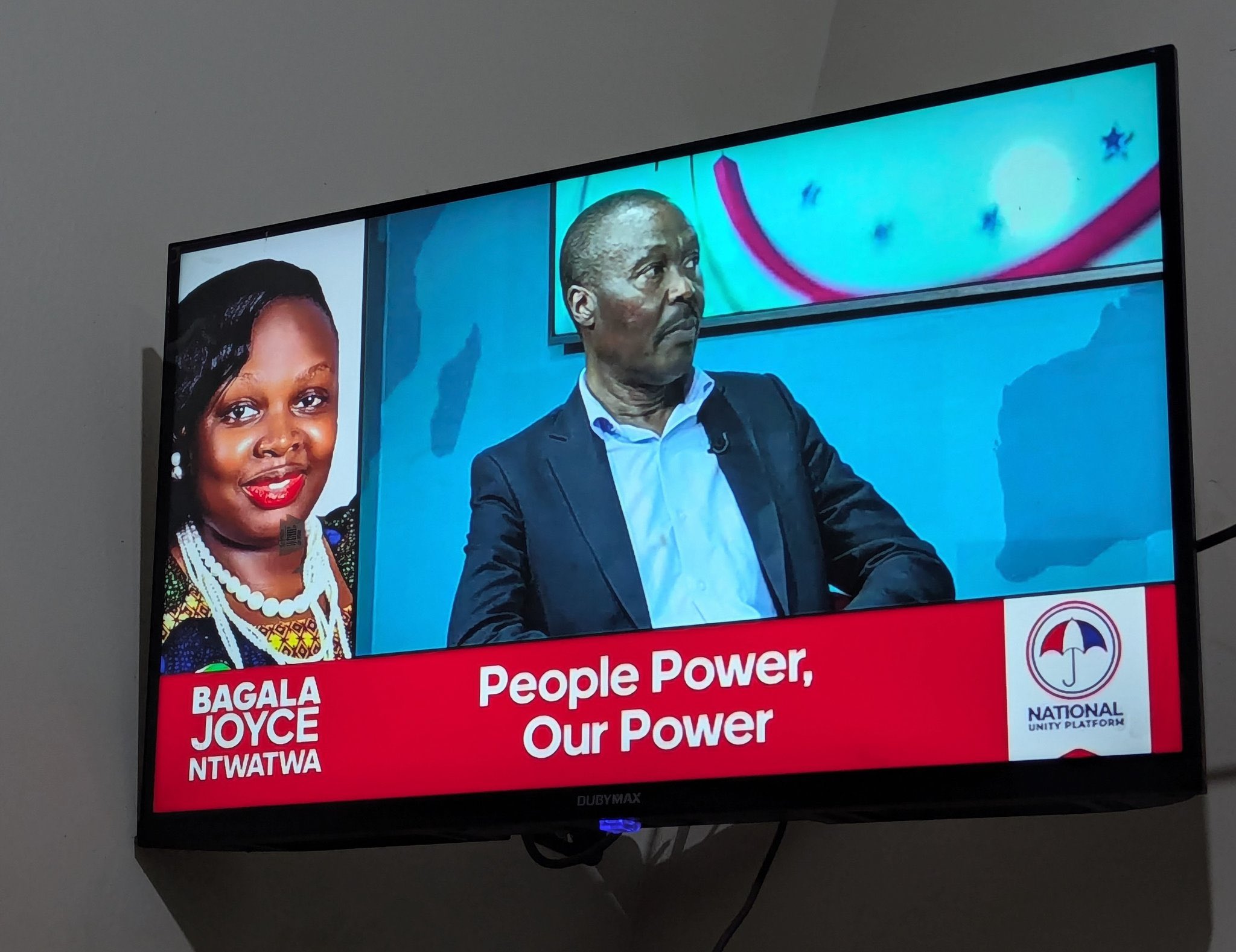
The Uganda Communications Commission (UCC) has banned NBS Television from airing split-screen advertisements during news and current affairs programmes, ruling that the practice violates the UCC Advertising Standards 2019 and provisions of the Uganda Communications Act.
In a decision that now sets a binding precedent for the entire broadcasting industry, the regulator has also ordered all television stations in Uganda to immediately stop running split-screen adverts during news bulletins, talk shows and current affairs programming.
The directive follows an arbitral complaint lodged by Adlegal International Limited against NBS Television Limited. The complainant accused the broadcaster of repeatedly breaching the UCC Advertising Standards 2019 by embedding commercial content alongside editorial news content through split-screen advertising.
According to the ruling, the Commission found that the practice blurs the line between editorial independence and commercial messaging, undermining the integrity, credibility and neutrality of news content. UCC held that news and current affairs programmes must remain free from advertising formats that could mislead viewers into confusing paid commercial messages with editorial material.
“The Commission finds that split-screen advertising during news and current affairs programmes is inconsistent with the Advertising Standards and the principles governing responsible broadcasting,” the decision reads in part.
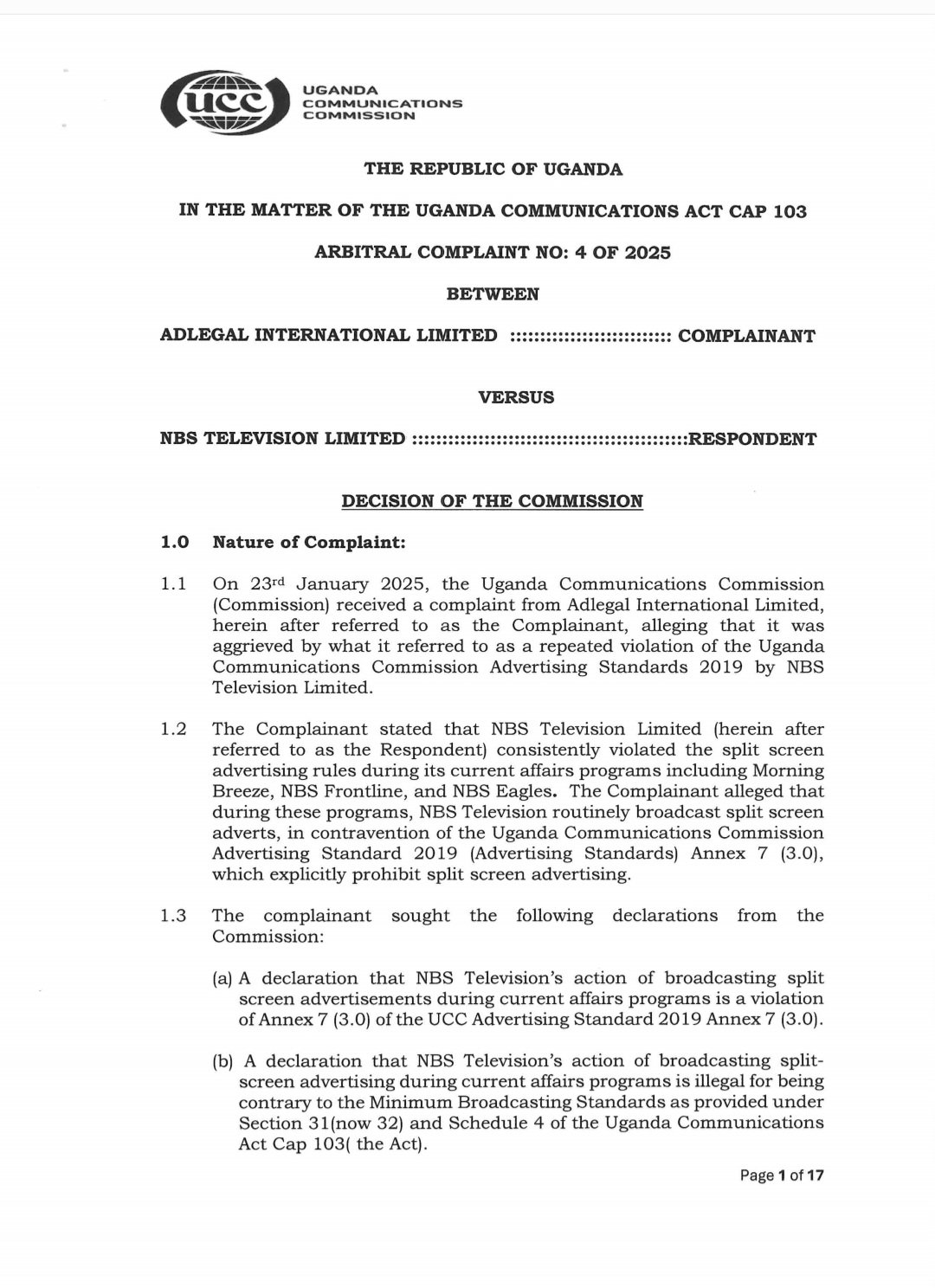
UCC further noted that while advertising is a legitimate revenue stream for broadcasters, it must be conducted in a manner that respects journalistic ethics, protects audiences and upholds public trust in news programming.
As part of the ruling, NBS Television was directed to cease the practice with immediate effect. More significantly, UCC extended the directive to all licensed television broadcasters, effectively outlawing split-screen adverts during news and current affairs across the sector.
Industry observers say the decision could have major financial implications for broadcasters, particularly at a time when advertising revenues are under pressure. Split-screen adverts have become increasingly common as stations seek to monetise prime-time news slots without interrupting programming.
However, media analysts argue that the ruling reinforces a long-standing regulatory principle: that news must not be commercialised in ways that compromise editorial independence or viewer clarity.

UCC warned that failure to comply with the directive will attract sanctions as provided for under the Uganda Communications Act, including fines or other regulatory penalties.