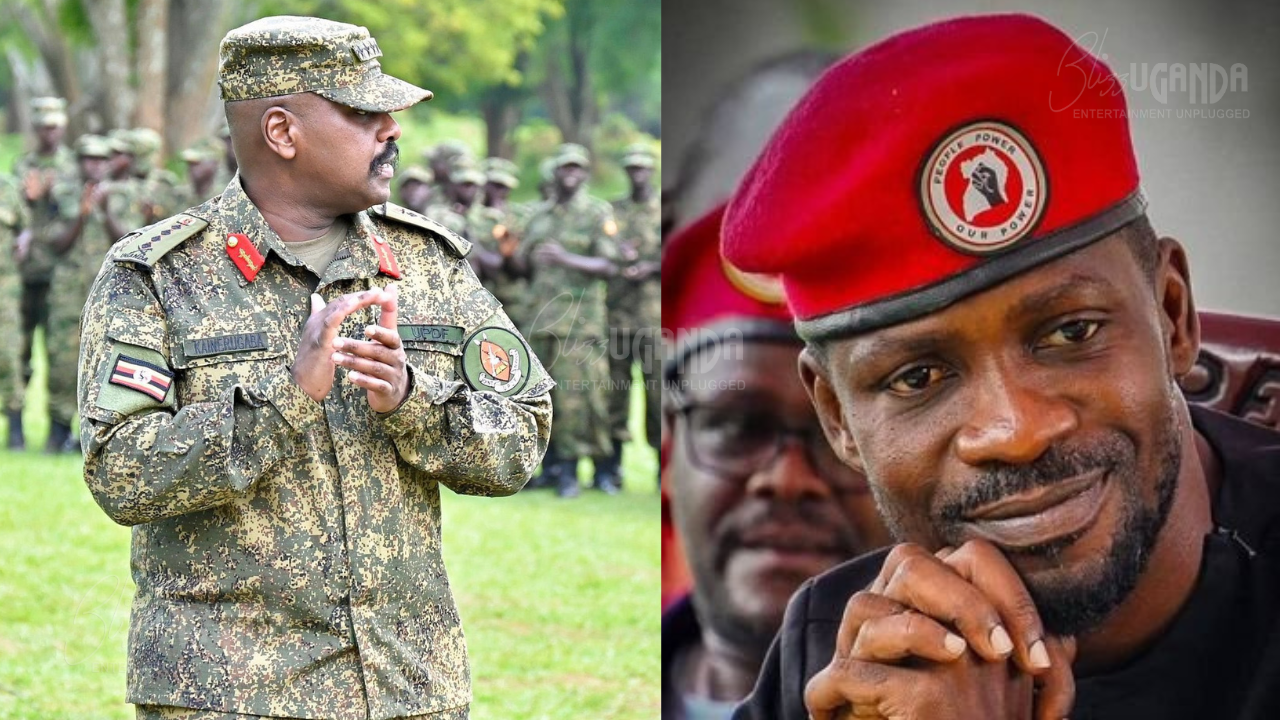
Uganda’s post-election crisis has taken a dangerous turn following a series of incendiary social media posts by the country’s Army Chief, Gen Muhoozi Kainerugaba, that have fueled fears for the life of opposition leader Robert Kyagulanyi, popularly known as Bobi Wine.
While Gen Muhoozi did not explicitly issue an order to arrest Bobi Wine “dead or alive,” his recent online remarks in the aftermath of the disputed January 15, 2026 presidential election have been widely interpreted as an implicit threat, triggering outrage at home and abroad.
President Yoweri Museveni was declared the winner of the election with 71.65 per cent of the vote, securing a seventh term in office and extending his rule beyond four decades. Bobi Wine, who officially polled about 2.7 million votes—roughly 24 to 25 per cent—rejected the results, accusing the state of widespread rigging, voter intimidation and manipulation of the electoral process.
Tensions escalated sharply in the days that followed. Bobi Wine went into hiding after what he described as a military raid on his home in Magere, during which armed soldiers allegedly assaulted his wife, Barbie Itungo Kyagulanyi, leaving her hospitalised. Security agencies have denied the severity of the incident, but the opposition leader insists his life is in danger.
Gen Muhoozi, who is also President Museveni’s son, then took to X (formerly Twitter), issuing a 48-hour ultimatum demanding Bobi Wine surrender to authorities. In his posts, he labelled the opposition leader a “terrorist” and a “coward,” dismissed claims that Barbie Kyagulanyi had been assaulted, and warned of grave consequences if Bobi Wine failed to comply.
Some of the remarks were especially chilling. In posts that later went viral, Muhoozi claimed security forces had already killed dozens of people during post-election operations and ominously suggested Bobi Wine could be next, at one point stating he was “praying” that the opposition leader would be among those killed. In another instance, he implied that failure to surrender would be treated as rebellion.
Although Muhoozi stopped short of using the phrase “dead or alive,” critics argue that the combination of death wishes, military language and public ultimatums from the country’s top army officer amounted to a de facto manhunt. Social media users and some media headlines quickly framed the situation as an order to capture Bobi Wine “dead or alive,” further intensifying public alarm.
The statements sparked widespread condemnation, with human rights groups, opposition figures and international observers warning that such rhetoric from a senior military official undermines the rule of law and places civilians at risk. Following the backlash, Muhoozi deleted several of the controversial posts but went on to threaten counter-sanctions against Western countries if they punished Uganda.
Meanwhile, reports of post-election violence continue to surface. Opposition supporters claim dozens have been killed, hundreds charged and thousands detained in security operations since the polls. The European Union, the United States and prominent lawmakers such as Senator Jim Risch have criticised the election process, the crackdown on dissent and threats against opposition leaders.
Museveni’s criminal son is still looking for me and issuing threats to harm me. Thankfully, our people are still keeping me safe. My wife is still recovering from the trauma of an overnight raid and assault. Thousands of our people have been violently arrested and detained. My… pic.twitter.com/Kho7OYaq13
— BOBI WINE (@HEBobiwine) January 26, 2026